A Nursery School Under a Tree by Tova Tampe
Reflections from a First Visit to Samburu
〰️
Reflections from a First Visit to Samburu 〰️
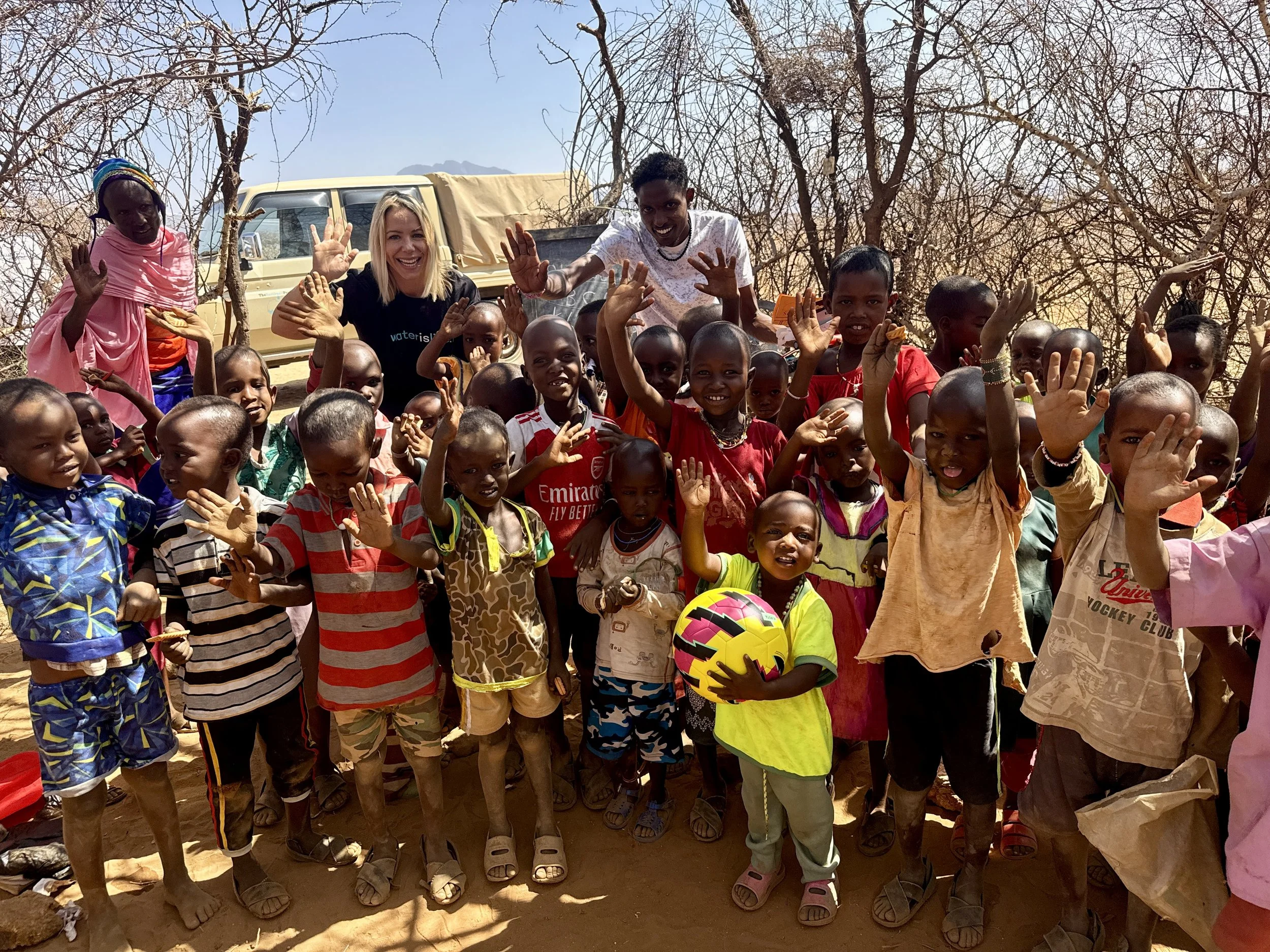
Tova with teacher Moses and his preschoolers
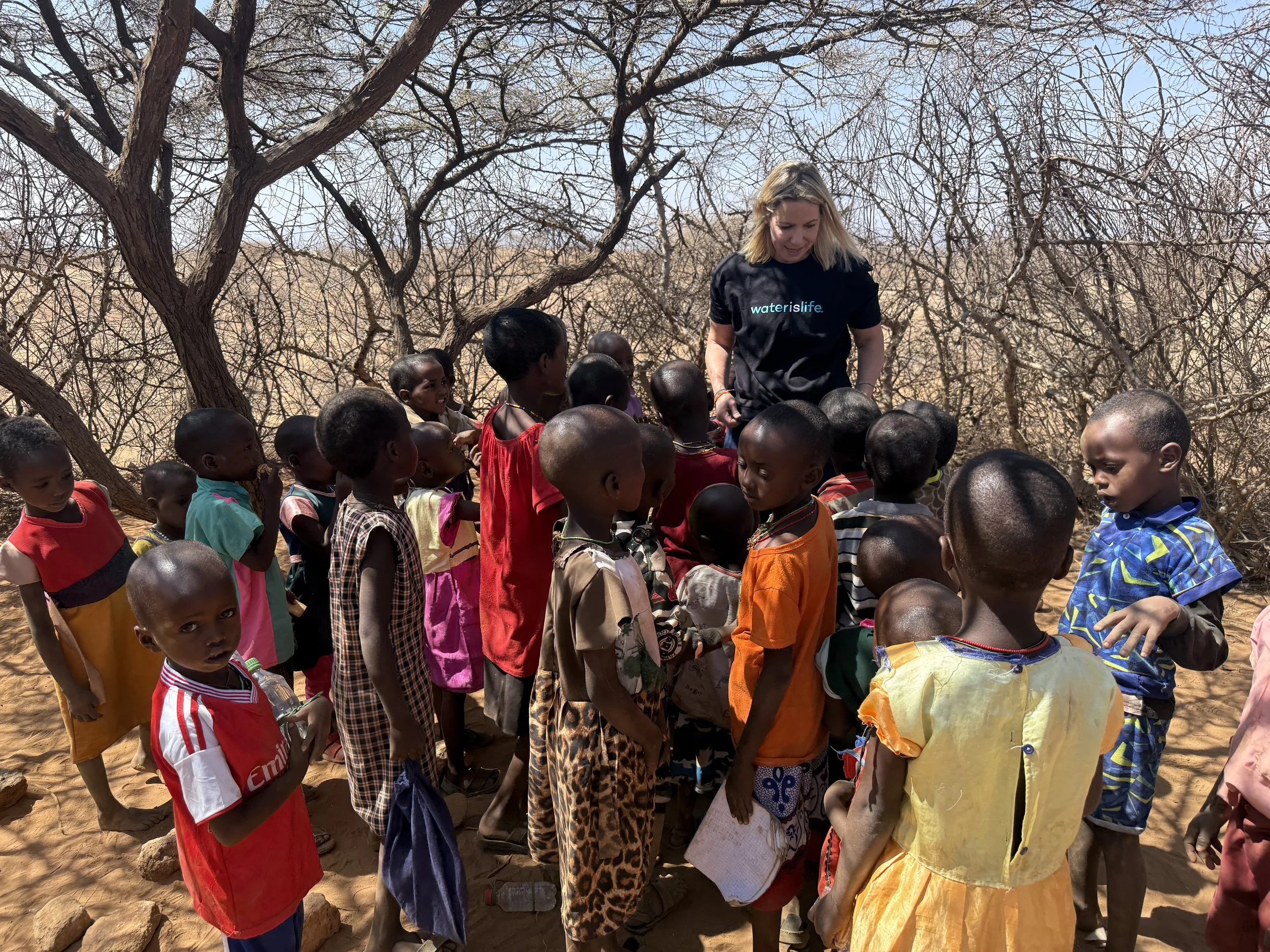
Another visit brought us to a nursery school serving about 40 preschool children. The teacher, Moses — a young man in his mid-twenties who studied tourism — leads the class under a tree. The space is fenced in with branches, with a makeshift roof providing some shade from the intense sun. A worn chalkboard stands at the front, and the children sit on stones scattered on the ground.
This is where they learn.
Moses was warm and grateful — genuinely happy to have this role in his community and visibly invested in every child in front of him. During our visit, a few parents dropped by to greet us, the kind of easy, informal connection that spoke to how embedded this small school already is in the life of the community around it.
The school itself was made possible because the community now has reliable water access. A solarized well built in 2023 means families can spend less time collecting water and more time investing in their children's education.
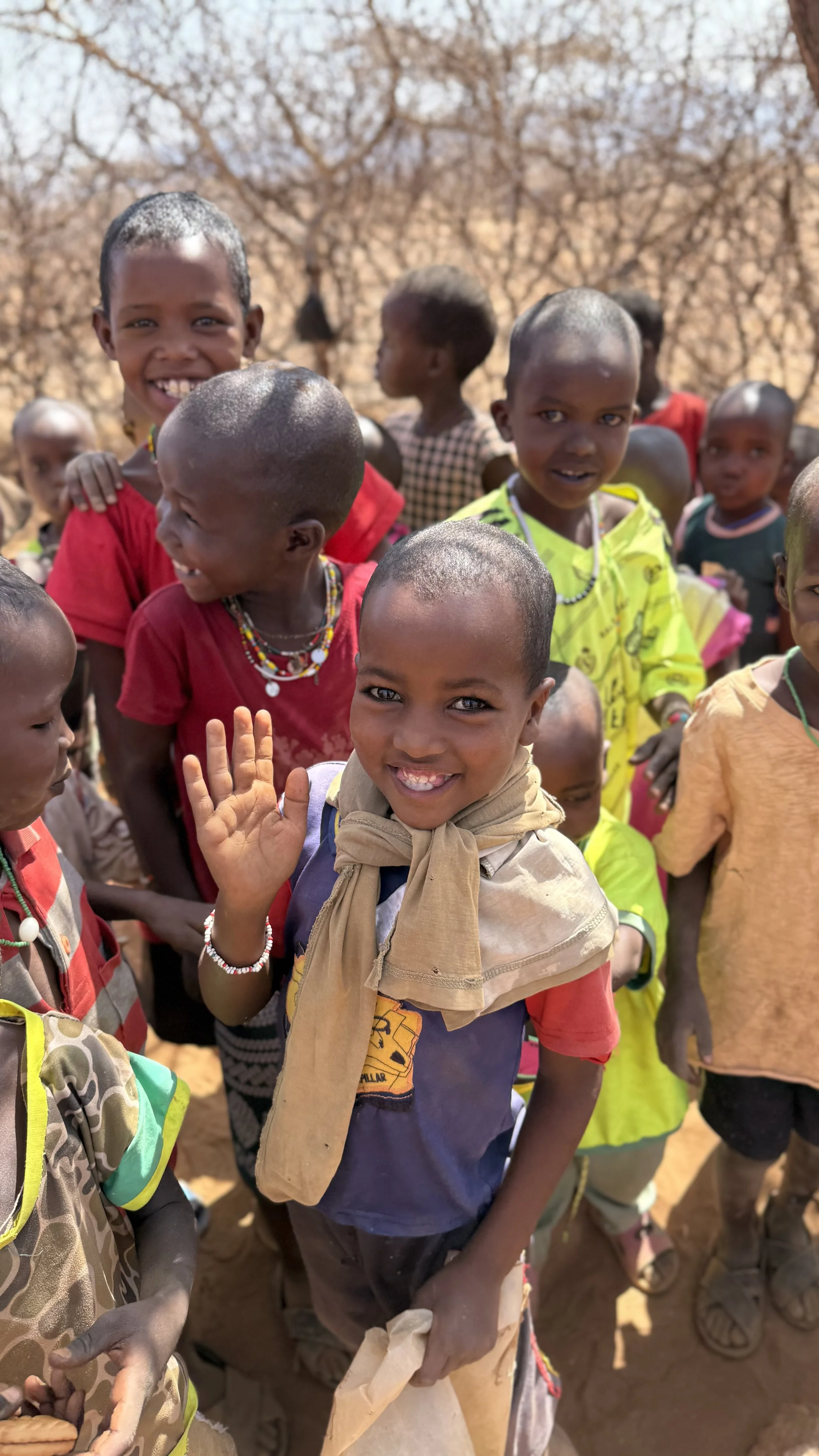
When we first arrived, some of the younger children were uncertain about us — Linda and I were mzungu, and for many of them it was their first time seeing a white person up close. They watched us with wide, cautious eyes. But children being children, the wariness didn't last long. During the lesson, a young girl named Ngitessia stood up and began leading her classmates through the alphabet and counting exercises, her classmates following her with confidence. By the time we were ready to leave, we presented the children with a new football — and whatever remained of the shyness dissolved instantly into smiles and laughter.
It was one of those small moments that stays with you. Not because anything dramatic happened, but because of what it represented:
“The simple, powerful possibility that opens up when a community has water, a teacher who shows up, parents committed to a brighter future for their children, and children who are just allowed to be children.”