
Women Gathering at Westgate Clinic by Tova Tampe
Reflections from a First Visit to Samburu
〰️
Reflections from a First Visit to Samburu 〰️
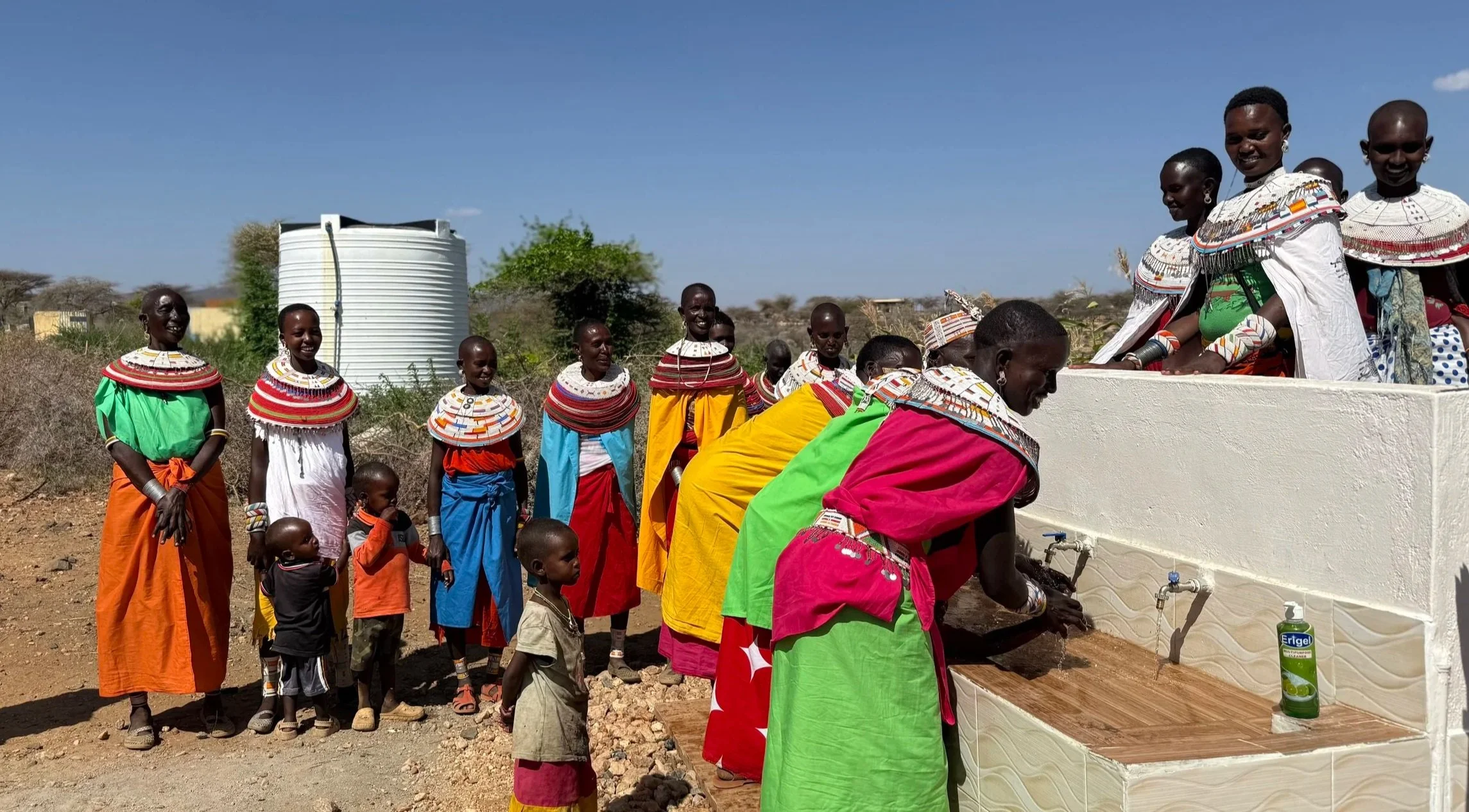
Water flowing at the Westgate Clinic!
One of the most memorable moments of the visit was arriving at the Westgate Clinic for a WASH workshop. The clinic sits just down the road from the boundary of Samburu National Park — a reminder that in this part of Kenya, wildlife and daily life exist in close proximity. On some days, we were told, elephants wander by the clinic in search of the corn the doctor has recently planted in his kitchen garden — a garden made possible because The Samburu Project has brought water to the clinic itself.
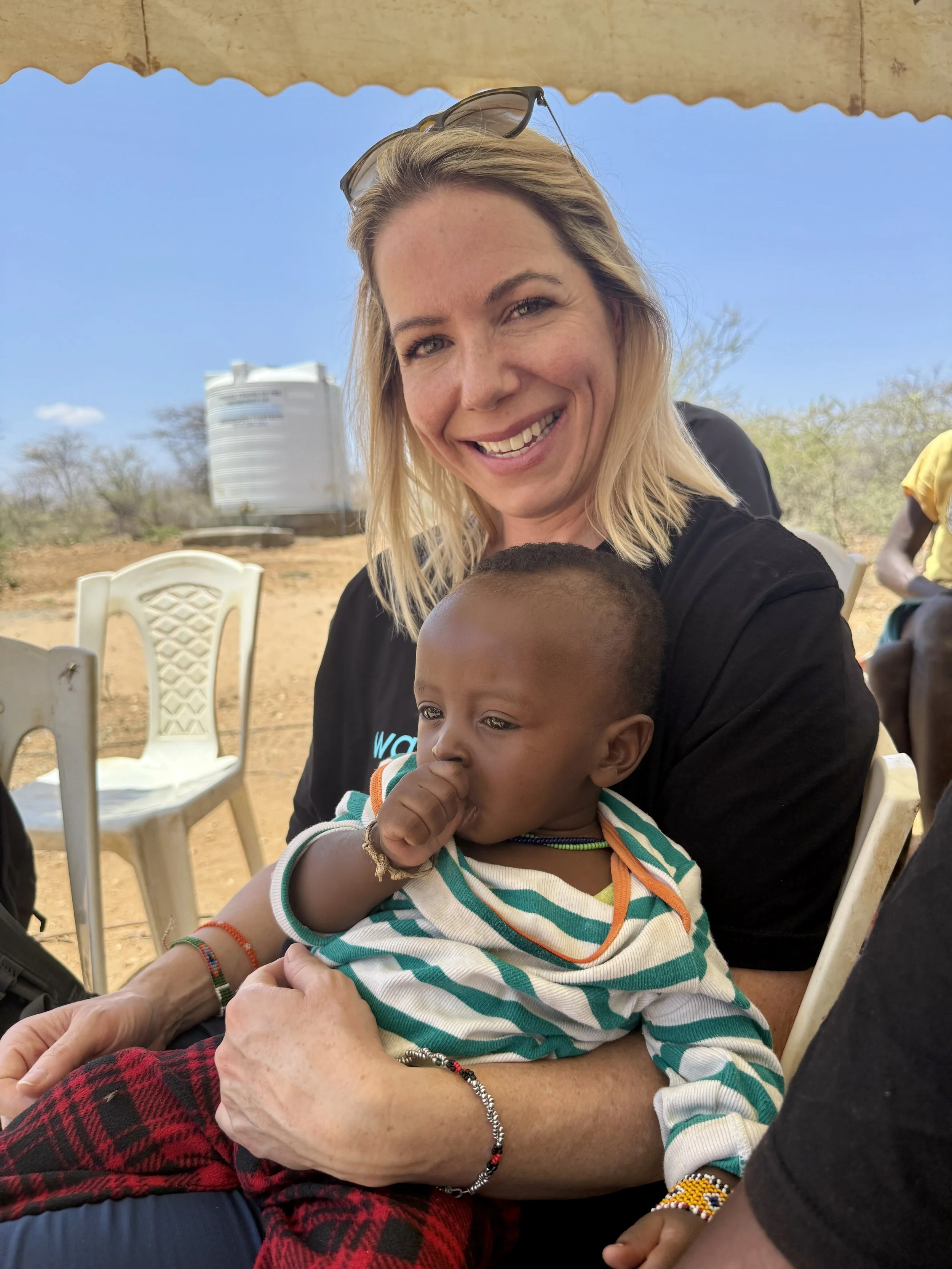
Tova holds a baby during the WASH workshop so a mother could join the discussion
It was a dry, hot, brilliantly sunny day, and a large tent had been set up in front of the clinic, with chairs arranged in the shade so that the roughly 100 women who attended could sit comfortably out of the sun. Big speakers filled the air with music as people gathered, then carried the voices of the two Ministry of Health facilitators as the session got underway. The energy was festive before it was formal — and as we approached, women began dancing through the gate, singing and welcoming us with a warmth and joy that stopped me in my tracks.
The facilitators were dynamic and deeply engaging, holding the attention of a large crowd in the open air with real skill. The workshop covered how contaminated water leads to illness and diarrheal disease, and how simple behaviors — washing hands before eating, after using the toilet — can protect entire families. Demonstrations took place at a newly built handwashing station just outside the clinic entrance, a clean white block fitted with four taps and soap, where women carefully washed their own hands and their children's hands, putting the lessons into practice in real time.
The majority of attendees were women, dressed in their gorgeous traditional beadwork, though men participated too. Information pamphlets were passed around, and despite many women being unable to read, they followed along with genuine interest — studying the pictures illustrating safe water and hygiene behaviors, leaning in to look more closely. At one point, a woman handed me her baby so she could fully focus on the discussion.
Although I do not speak Kisamburu, what needed no translation was the engagement in the room — the attention, the questions, the sense that this information was landing and that these women valued every word of it.