
Boaz Leleina's Story, Part I: Life as a Moran
Growing Up Samburu
〰️
Growing Up Samburu 〰️
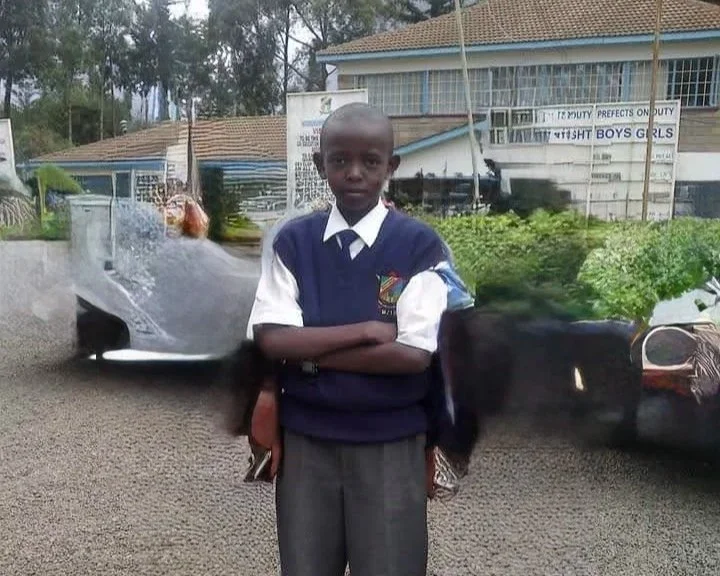
Boaz, as a young boy in Samburu, Kenya
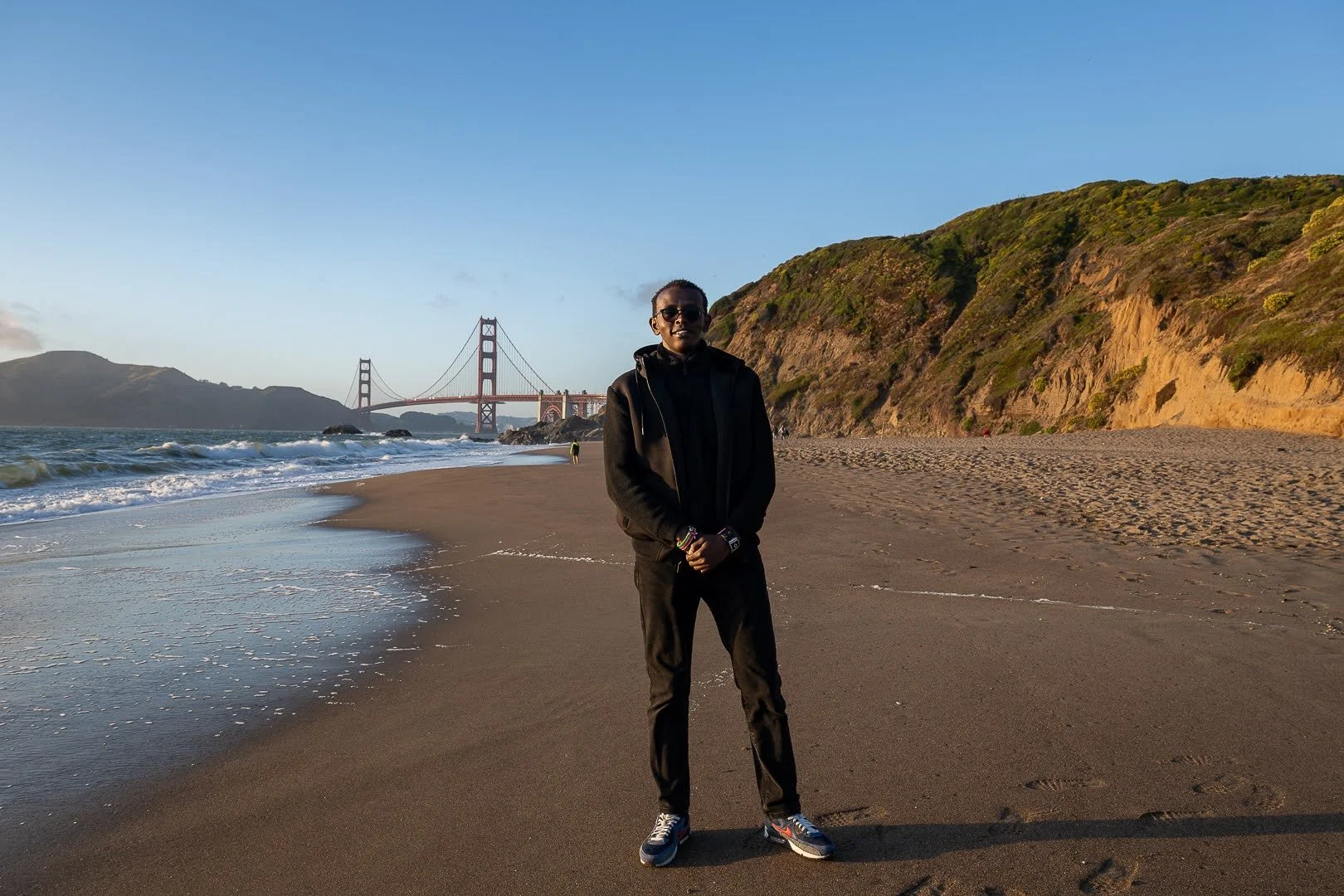
Boaz, in San Francisco, California
“How could a boy raised in the drylands of Samburu, Kenya, whose world revolved around cattle, spears, and starry skies, now be standing in San Francisco, surrounded by steel and glass?”
As I stood staring at the Golden Gate Bridge, its towers wrapped in mist, a glistening rose in my eye. No, it wasn’t a tear—for Morans, warriors, do not cry. That lesson had been instilled in me since childhood. But in that moment, memories swept over me so vividly I feared I might wake up to the bleating of goats and the rhythmic clatter of cow hooves being driven out to pasture.
You see, this journey has been so wild, so improbable, that sometimes I wonder if I am dreaming. How could a boy raised in the drylands of Samburu, Kenya, whose world revolved around cattle, spears, and starry skies, now be standing in San Francisco, surrounded by steel and glass?
The World I Was Born Into
I was born in Samburu County, a place where time itself is forgotten and dictated by the rising sun—a land where tradition and culture shaped the very essence of life. There, the earth was both teacher and test. The red soil stained your feet, the scorching sun hardened your skin, and the silence of the wilderness sharpened your courage.
From a young age, I knew what was expected of me: to become a Moran, a warrior. In Samburu culture, Morans are the protectors of the community, entrusted with guarding our people, herding livestock, and upholding the honor of our traditions.
“We were taught to stand tall, to never show weakness, and above all, to protect.”
My days began before sunrise, leading goats and cows across the plains in search of grazing fields. The air was crisp, sometimes cold, but the rising sun painted the land gold, and I felt alive with purpose. Afternoons were long and hot, with sweat rolling down my back as I guided the herd, always alert for signs of danger—stray predators, rival herders, or sudden storms.
At night, under a sky so full of stars it felt like a blanket of light, we gathered as Morans. We shared stories, tested our courage, and prepared for the responsibilities ahead. To be a Moran was not just about strength—it was about endurance, loyalty, and sacrifice.
Lessons from the Wilderness
Life in Samburu was my first classroom. I learned patience by waiting for rain in seasons of drought. I learned courage by facing the wild, knowing danger was never far. I learned resilience in the long treks under a merciless sun, guiding animals that depended on me for survival.
As the Samburu say: “Nkirramuti naata oltau esikiria, naata olamei enkakenya” — however long the night, the dawn will break. Those words echoed in my life long before I ever left Samburu, and they became the rhythm of my journey: hardship, endurance, and finally, light.
These lessons would stay with me, though I never knew how far they would carry me. At the time, my world was bounded by the hills and the herds. The idea of crossing oceans, of living in America, of studying computers in Silicon Valley, was not just unlikely. It was unimaginable.
Yet the warrior’s journey is never predictable. And mine was only beginning.
A New Horizon
“What was once a spear in my hand had now been replaced by a laptop and a cup of coffee.”
As the sound of a ship’s horn echoed across the Bay, I was pulled back to reality. I couldn’t help but chuckle. What was once open wilderness had been replaced by busy roads and buildings that touched the sky.
This was just the beginning of a journey with more twists and turns than the winding paths of the Samburu hills. And I couldn’t help but wonder: how did a boy from a land where time seemed almost forgotten find himself here, where the night sky is no longer filled with stars, but with the glow of city lights?
The answer lies in the moments that followed—moments when tradition collided with curiosity, when the Moran’s spear met the computer keyboard.
This is where my story truly begins. Join me in Part Two, where I share how a boy of the Samburu first discovered the glowing screen that would change his life forever.