
Supporting Girls Through the Flow Club by Tova Tampe
Reflections from a First Visit to Samburu
〰️
Reflections from a First Visit to Samburu 〰️
We began with a visit to the head teacher's office — formal greetings are the proper procedure, and that courtesy sets the tone for everything that follows. From there, we were led outside to meet the girls of the Flow Club, who were seated in three rows of chairs under a tree in the front of the school yard. Around them, the school was alive with the midday rhythm of children making their way to the lunch line and washing their hands before eating.
The club includes 15 girls who meet regularly as part of The Samburu Project's menstrual health program. For many girls in rural areas, lack of access to menstrual hygiene information and supplies can make it difficult to attend school consistently. Programs like this help ensure that girls have the knowledge, confidence, and support they need to stay in school.
What struck me most was how the girls carried themselves.
“They were friendly, smiling, and genuinely happy to share their experiences — open in a way that spoke to how safe and supported they feel within the program. But they also shared real concerns. ”
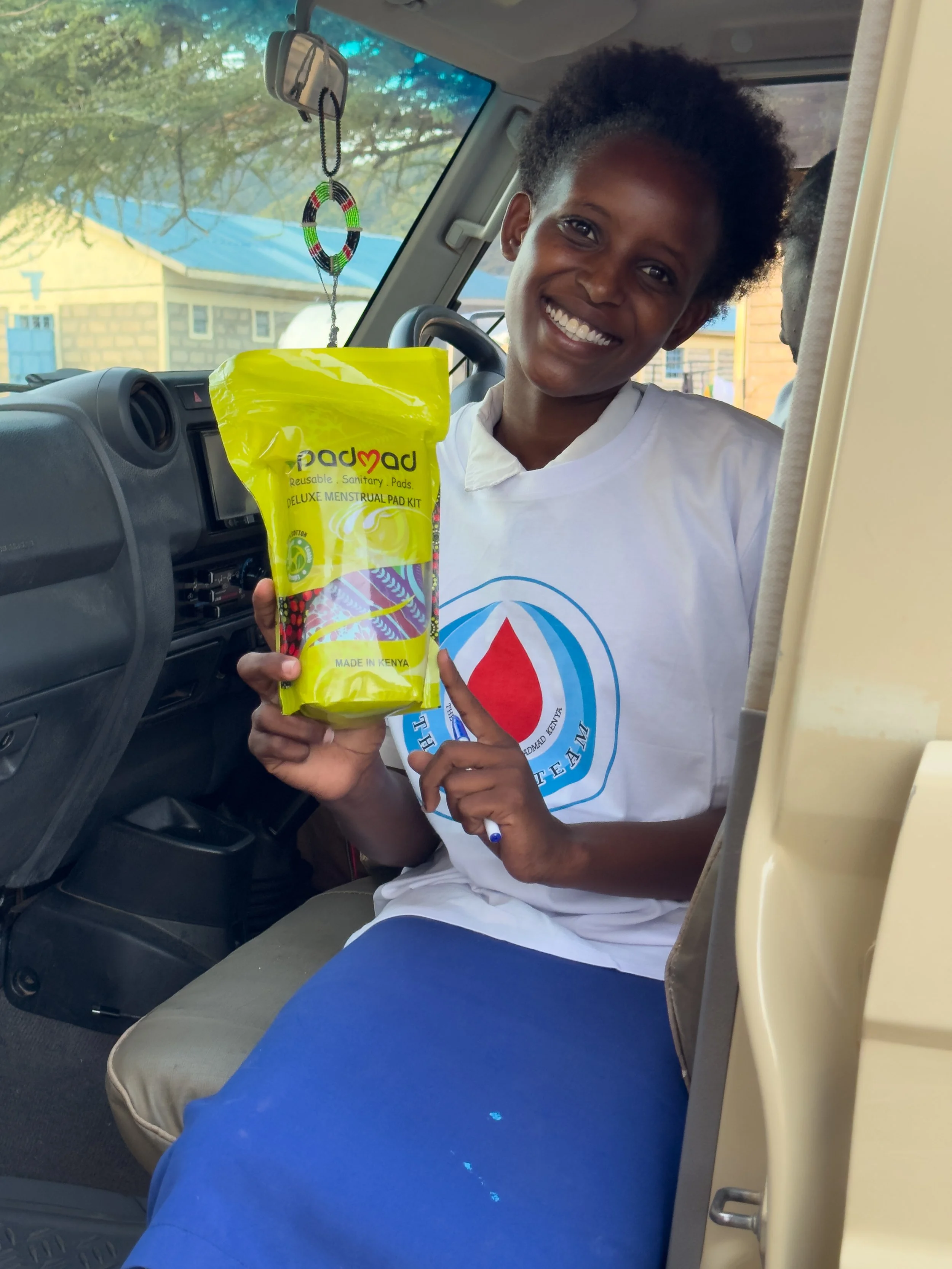
Access to water for washing their reusable supplies is a challenge, and girls who arrive home late from school often don't have time to fetch water before dark. These are not small obstacles — they sit at the intersection of every challenge these communities face, and they matter.
We listened carefully, and left the conversation thinking hard about how The Samburu Project can work with the school, suppliers, and partners to better support these girls. That kind of honest exchange — where young women feel confident enough to name what isn't working — is itself a sign of a program that has earned their trust.
And it is exactly the kind of feedback that should shape what comes next.